
RF-2 Deep Dive: How a Key-Swappable Smart Lock Cuts After-Sales Costs by up to 80%
The Trueway RF-2 replaces the most expensive part of smart-lock ownership — the technician visit — with a 10-second module swap. This article breaks down the patented structure, the five unlock methods, the four scenario modules, and what the economics mean for distributors and project buyers.中文摘要:Trueway RF-2 用 10 秒换模块替代了智能锁最昂贵的环节——技师上门。本文拆解其专利结构、五种开锁方式、四种场景模块,以及对经销商与工程买家的经济意义。(正文为英文)
The Problem: A Broken Smart Lock Means a Technician Visit
Ask any distributor what eats the margin on a smart lock deal, and the answer is rarely the hardware — it is the after-sales visit. When a conventional smart lock fails, the sequence is always the same: the lock has to come off the door, a technician has to be scheduled, the end user pays extra or the distributor absorbs the cost, and everyone waits. Across the industry, a single service call typically costs $50–$150 once you count labor, transport and logistics. In a 500-unit apartment project, even a modest failure rate turns into a line item big enough to erase the project margin.
The deeper issue is structural: in a conventional lock, the electronics, the reader and the firmware are fused into one sealed unit. Any fault in any subsystem means the whole lock is out of service. There is no field repair, only replacement.
The Structure: Turn the Key Left 90°, Swap the Module in Under 10 Seconds
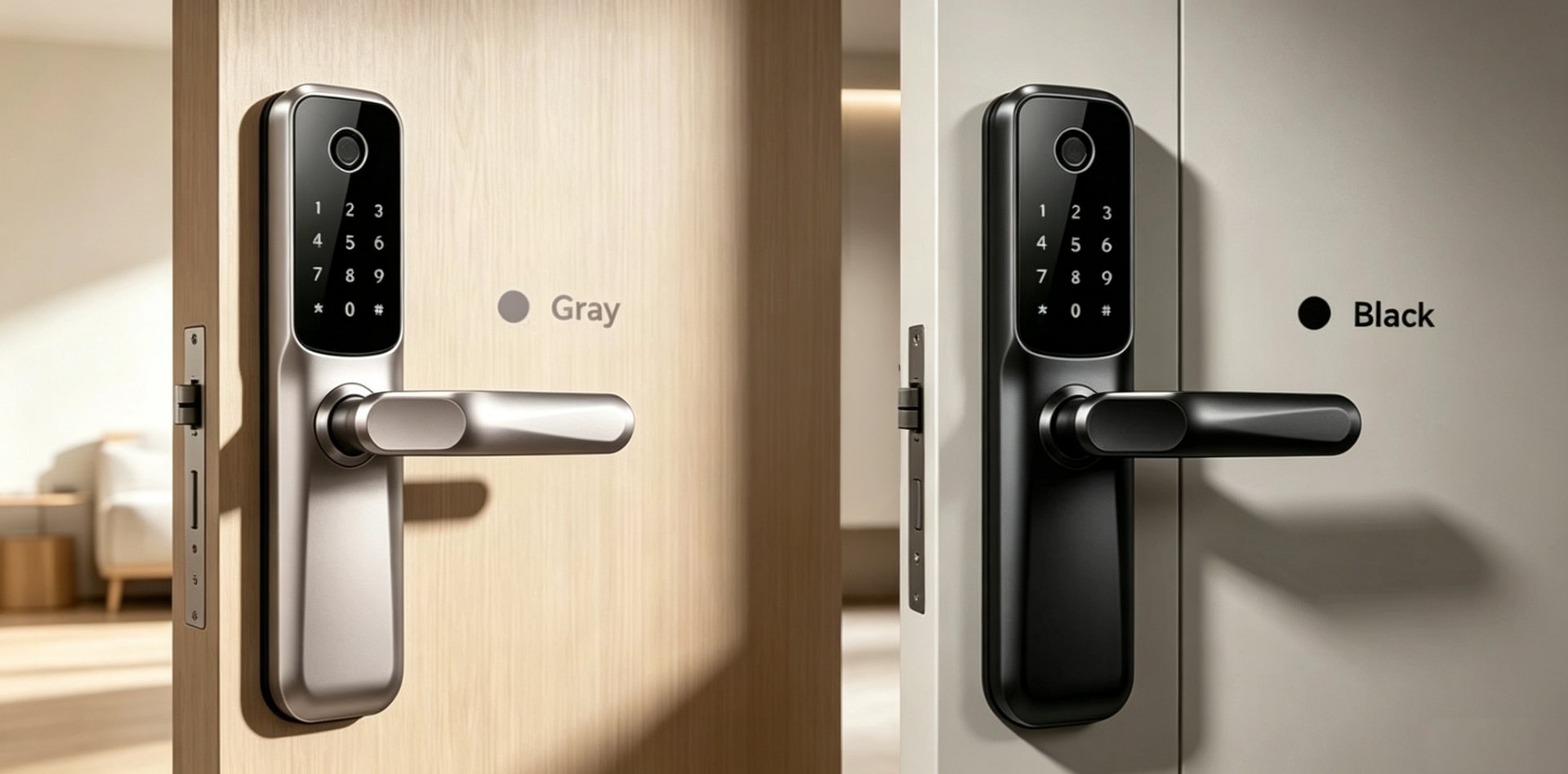
The RF-2 is built on Trueway's patented key-swappable structure (US 12,499,723 B1 · DE202025001780 · CN201610502753). The same mechanical key that opens the door also services the lock: turn it right to unlock, turn it left 90° and the front-panel module releases. The module — fingerprint reader, keypad, card reader, firmware — slides out as one unit. A spare module slides in. The whole operation takes under 10 seconds, needs no tools, and the lock body stays on the door.
For the end user, the door is back in service before a conventional support ticket would even be answered. For the distributor, a "repair" is now a small module in a padded envelope instead of a technician in a van. That is where the up-to-80% reduction in after-sales cost comes from: not cheaper parts, but the near-elimination of the visit itself.
Side by Side: Key-Swappable vs. Conventional
| The Key-Swappable Smart Lock | Every Other Smart Lock | |
|---|---|---|
| Broken? | Swap the module with a key. The lock stays on the door. | Remove the lock. Call a technician. Pay extra. Wait weeks. |
| Outdated? | Upgrade the module in seconds. | Buy a new lock. Install again. |
| Want more features? | One body. Multiple modules. | One body. One function. That's it. |
Five Ways to Unlock, One Lock
Module swaps change the economics; the daily experience wins the residents. RF-2 ships with the five methods B2B buyers ask for most: semiconductor fingerprint recognition (identification in about 1.5 seconds, FAR below 0.001%), IC card (50 users), password with anti-peep support — random digits can be added before and after the real code so onlookers cannot tell which digits matter — app control with temporary passwords sent from a phone to guests and cleaners, and the mechanical key as the final fallback. Built-in WiFi connects RF-2 to 2.4G networks through the Tuya Smart app for remote unlock, password dispatch and unlock-record review — standard, not an option.
Four Scenarios, Four Modules
Because only the module defines the feature set, one RF-2 lock body covers an entire project. A family home gets Module 1 (fingerprint + IC card + password + app). An apartment block gets Module 2 (IC card + password + app) so landlords can issue and revoke credentials without touching doors. A hotel gets Module 3 (IC card + app) — the lean configuration front desks actually use. And a luxury residence can specify the optional Module 4, which adds face recognition on top of the full set. The installer learns one lock body; the buyer differentiates door by door with modules that cost a fraction of a lock.
What This Means for Distributors and Project Buyers
The commercial case compounds. One SKU with multiple functions means a leaner warehouse — one lock body plus a handful of module SKUs instead of separate product lines per feature set. The patented structure is a genuine differentiator at the negotiating table, which supports stronger pricing power than a me-too lock. Lower support costs protect the margin after the sale, which is where smart lock profits are usually lost. And every installed lock is a future module sale: upgrades, reconfigurations and spares all flow through the distributor who placed the original units.
For project buyers, the same structure de-risks the specification. Tenants change, access policies change, and feature expectations rise — the RF-2 absorbs all three with a module swap instead of a refit.
Learn more: RF-2 product page · full product line · patents & certifications · B2B FAQ.
Want pricing, MOQ and sample details for RF-2 in your market?想获取 RF-2 在你市场的报价、起订量与样品详情?