
How to Choose a Smart Lock Supplier for Your Market: 7 Checks for Distributors
A supplier decision is a multi-year commitment. These seven checks — patents, certifications, after-sales cost structure, SKU efficiency, upgrade ecosystem, territory policy, and factory strength — separate the suppliers that protect your margin from the ones that quietly erode it.中文摘要:选择智能锁供应商是一份多年承诺。本文从专利保护、认证、售后成本结构、SKU 效率、模块升级生态、独家区域政策、工厂实力七个角度给出核查清单,帮助经销商筛选真正能守住利润的合作伙伴。正文为英文。
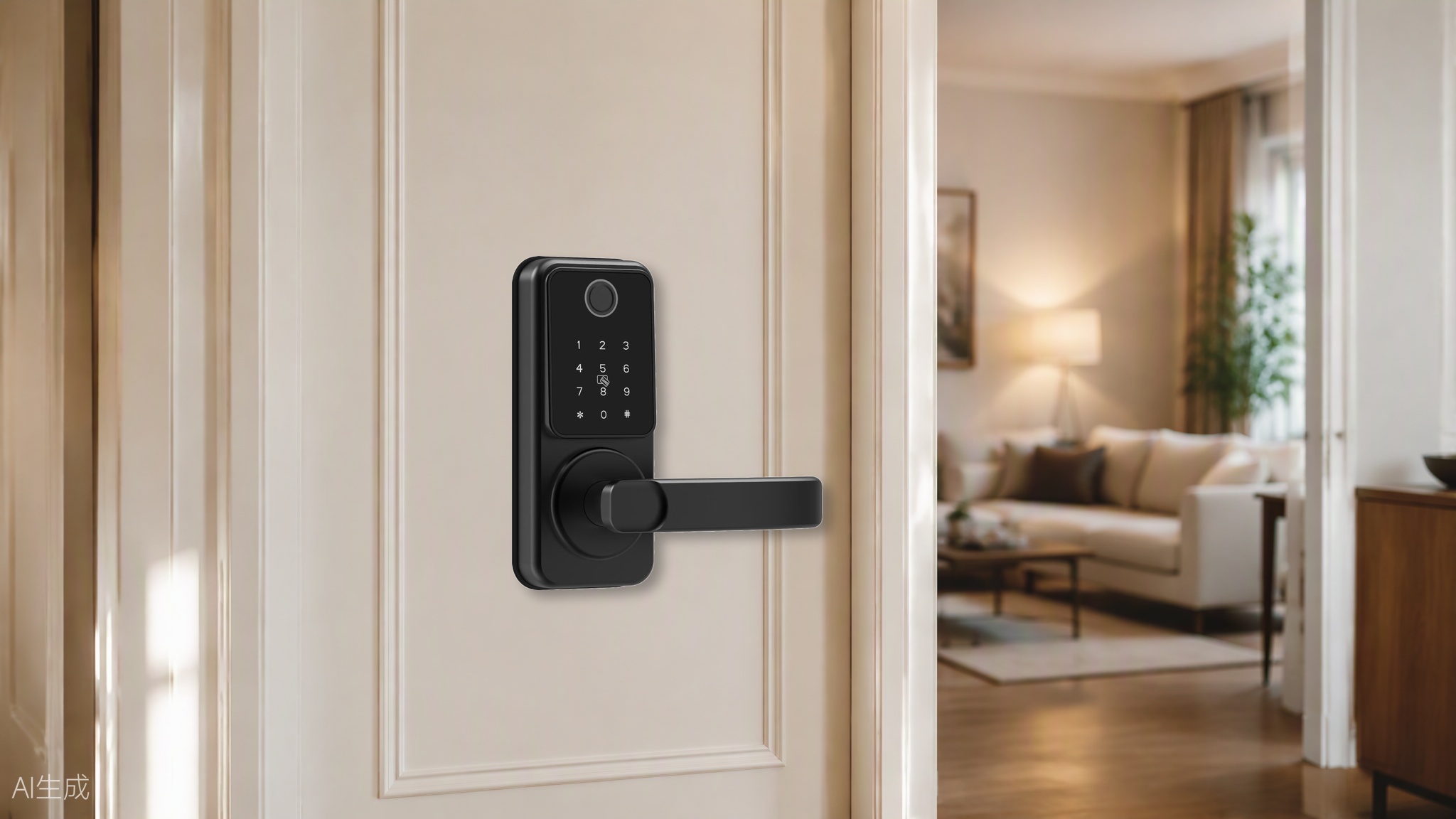
Choosing a smart lock supplier is a multi-year commitment. The lock you put your name behind today determines your service load, your inventory risk, and your pricing power for years. Before signing anything, run these seven checks.
1. Patent Protection You Can Actually Verify
Most smart locks come from shared public molds, which means your supplier's product is identical to what dozens of other factories sell. The first check is whether the product carries granted patents — not "patent pending" — in the markets where you will sell, and whether you can look the numbers up in public databases. TrueWay's key-swap mechanism, for example, is protected by US Patent 12,499,723 B1, German Utility Model DE202025001780, and China Invention Patent CN201610502753, with design patents on the RF-2 and RF-3 modules. A patented structure is the difference between selling a product and defending a price.
2. Certifications That Match Your Target Markets
Radio-equipped locks need market-specific approvals. For the United States, that means FCC-ID; for the European Union, CE-RED under the Radio Equipment Directive. Ask for the original certificates and confirm the model numbers match what you will import. A supplier with both FCC-ID and CE-RED in hand removes a major barrier to distribution across the Americas, Europe, the Middle East, Africa, and Asia.
3. The After-Sales Cost Structure
This is the check most distributors skip — and the one that decides profitability. With a conventional integrated lock, every field failure costs $50–$150 in technician time plus logistics and coordination. Ask the supplier directly: when the electronics fail in year three, who fixes it, how long does it take, and what does it cost? On a modular platform like TrueWay, the end user swaps the electronic module with a key in under 10 seconds, and distributors report up to 80% lower after-sales costs. The answer to this one question matters more than a few dollars of unit price.
4. SKU and Inventory Efficiency
Count how many SKUs a supplier forces you to stock. Three unlock methods in an integrated-lock world means three complete lock products to forecast, warehouse, and eventually discount. A modular system collapses that to one body plus three small module combinations. Fewer SKUs mean faster turnover, less dead stock, and simpler spare-parts logistics — all of which show up directly in cash flow.
5. An Upgrade Ecosystem, Not a One-Time Sale
Look at what happens after the initial installation. With most locks, the relationship ends at the sale — worse, the installed base becomes a liability of future service calls. A better model is a platform where the lock body stays on the door for years and functionality upgrades come as modules: the lock gets upgraded, not replaced. Every installed unit becomes a channel for repeat module sales at healthy margins, with no installation cost attached.
6. Exclusive Territory Policy
Even a strong product loses its value if the supplier sells to every importer who asks. Check whether the manufacturer enforces one partner per market in writing, and whether the product's patent position makes that exclusivity meaningful — exclusivity on a public-mold product protects nothing, because the same lock is available elsewhere. Pairing exclusive territory agreements with a patented, original structure is what gives a distributor durable pricing power.
7. Real Factory Strength
Finally, verify the organization behind the product. Useful signals: an owned facility rather than a trading-company front, a track record measured in years, and leadership that has shipped locks at scale. Guangzhou Runfu Biotechnology Co., Ltd, the maker of TrueWay, was founded in December 2015, operates a 2,500-square-meter facility in Zhongshan with more than 50 staff covering R&D, SMT, assembly, aging tests, QC, and packaging, and is led by founder Stanley Ke, who brings nearly 20 years of smart lock industry experience, including a senior role at Digi Lock — one of China's top-three smart lock exporters from 2002 to 2013, later acquired by Assa Abloy. A factory visit or a sample order will tell you the rest.
The Takeaway
Price lists are easy to compare; business models are not. The suppliers worth signing are the ones whose products protect your margin after the sale — through patents, certifications, a low-cost service structure, efficient inventory, upgrade-driven repeat revenue, enforced territories, and a factory that will still be there in ten years. Run the seven checks, and the shortlist usually gets very short.
Ready to evaluate TrueWay against this checklist? Start with the product line, the patent and certification wall, or the 57-question B2B FAQ.
Questions about distributing TrueWay in your market?想了解在你的市场经销 TrueWay?